
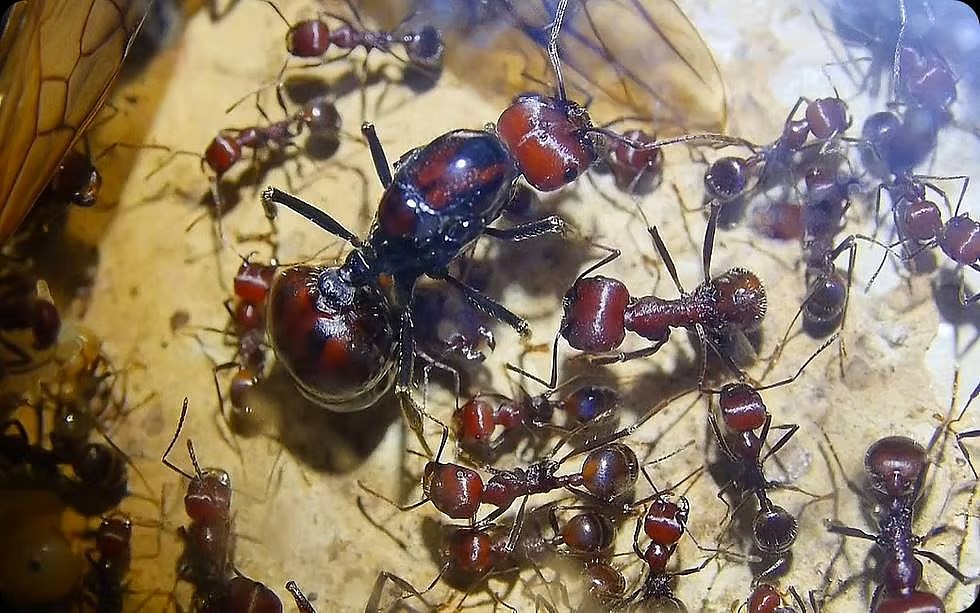
- Over the past year, Kenya has quietly emerged as a hotspot for an unusual form of trafficking—the illegal trade in ants. Not just a handful scooped from the ground, but thousands carefully collected, packaged, and transported alive.
At first glance, ant smuggling sounds like a story you laugh off. Someone arrested for hiding ants in their luggage hardly feels like breaking news. Yet the more you look, the less amusing it becomes.
Over the past year, Kenya has quietly emerged as a hotspot for an unusual form of trafficking—the illegal trade in ants. Not just a handful scooped from the ground, but thousands carefully collected, packaged, and transported alive.
At Jomo Kenyatta International Airport, one suspect was caught with more than 2,000 ants hidden in his luggage. In another case, authorities intercepted thousands more destined for foreign markets. Last year, four people were convicted after being found with over 5,000 ants, a haul valued at more than a million shillings locally and far higher abroad.
Why are ants so valuable? The answer lies in a niche but growing global hobby: ant‑keeping. In Europe and Asia, collectors pay premium prices for rare species, especially queen ants.
A single queen can start an entire colony, making her the most prized catch. East African species, such as large harvester ants, are particularly sought after for their size, behaviour, and adaptability. To collectors, owning one is like keeping a tiny, self‑sustaining world in a glass container. To traffickers, it is quick money from something that costs nothing to collect.
Read More
For years, wildlife trafficking in Kenya has focused on elephants, rhinos, and lions—the big animals that make headlines. But traffickers are shifting to smaller, less obvious species that are easier to move and harder to detect. Ants fit perfectly: tiny, silent, easy to hide, yet surprisingly profitable. It is a low‑risk, high‑reward trade for those who think they won’t get caught.
The danger is ecological. Ants aerate soil, disperse seeds, and control other insect populations. Removing them in large numbers may not show immediate damage, but over time it disrupts entire ecosystems. Their absence is easy to overlook until the harm is already done.
Awareness is another challenge. Some suspects claimed they did not know collecting and exporting ants was illegal. Whether true or not, it highlights a gap in public understanding. When ants are seen as worthless, it becomes easier to justify taking them. That mindset must change.
If Kenya is to get ahead of this trend, ant smuggling cannot be treated as a minor or amusing crime. Authorities need sharper surveillance at airports and borders, not only for large contraband but also for small, unusual shipments. Penalties must reflect the true value of what is being stolen. If traffickers can earn thousands of dollars from a suitcase of ants, a light fine will not deter them.
At the same time, Kenya could explore regulated, sustainable ways to benefit from this biodiversity. If there is international demand, there is economic value. With proper systems, Kenya could protect its species while tapping into that market legally.
In the end, this story is not just about ants. It is about how we value the natural world. It shows how something small and overlooked can suddenly become a target once someone decides it is worth money. Conservation is not only about protecting elephants and lions—it is also about safeguarding the tiny creatures that quietly hold ecosystems together.
Because if we are not careful, even the smallest pieces of our environment may be taken, one by one, until there is nothing left to protect.
Follow us on WhatsApp for community voices, and stories that matter
-1785307406.jpeg)


-1784287755.jpg)