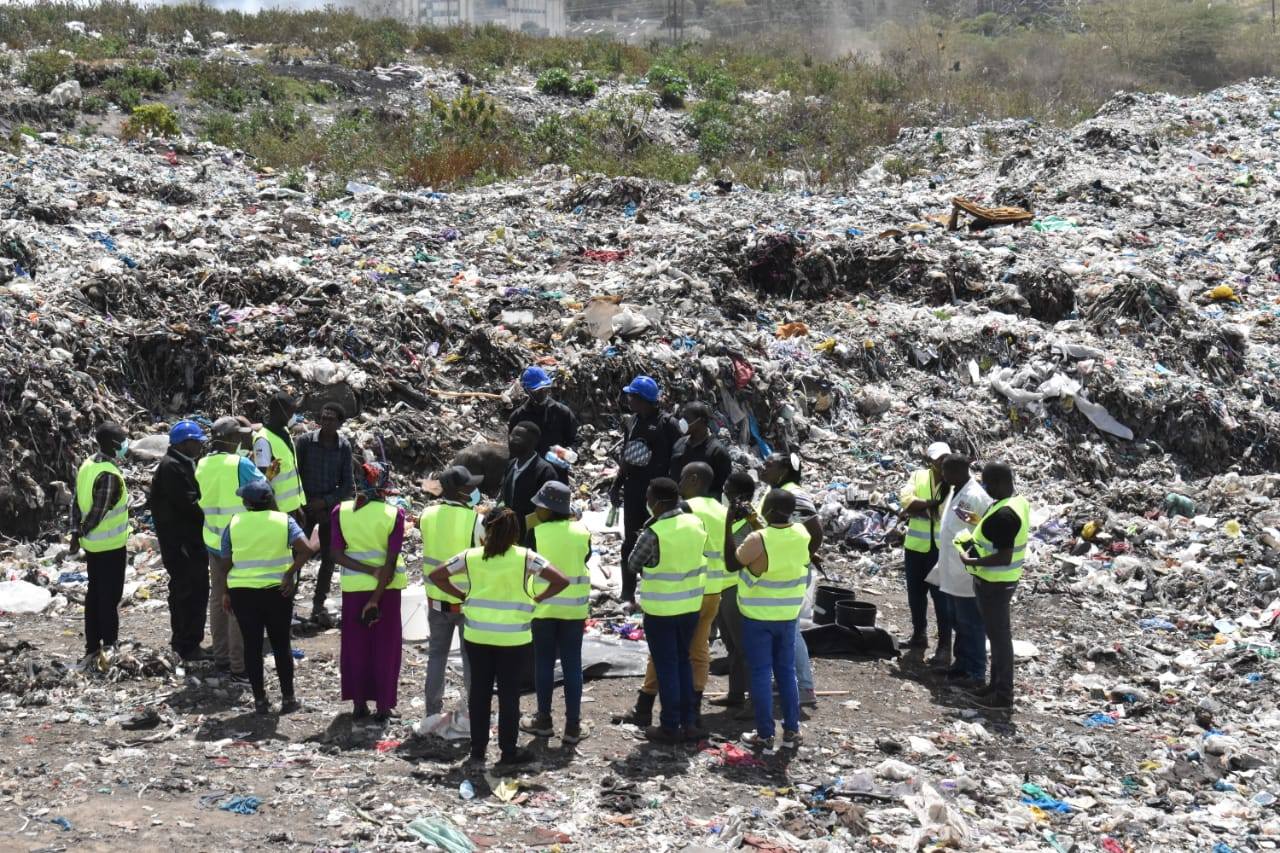
- The government is taking several steps to address the challenges at Gioto Dumpsite and move Nakuru towards a circular economy. Field teams have been assessing the scale of daily dumping to better understand waste volumes and inform future recycling capacity.
The County Government of Nakuru has begun laying groundwork to transform Gioto into a recycling hub. Through the Department of Environment and Climate Change, led by Director Grace Karanja, the county is working with the Kenya Climate Innovation Center (KCIC) to implement a National Circularity Study.
Gioto Dumpsite is located in London Estate, about 3 km from Nakuru town along the Nakuru–Kabarak road.
According to the County Government, the study, technically steered by the Kenya Industrial Research and Development Institute (KIRDI) under the guidance of the State Department for Environment and Climate Change and the National Environment Management Authority (NEMA), recently concluded a two‑day fieldwork exercise at MOB Industries Limited and Gioto Dumpsite.
Teams collected data on waste volumes and recycling practices, aiming to generate reliable information that will guide Nakuru’s transition to a circular economy.
Read More
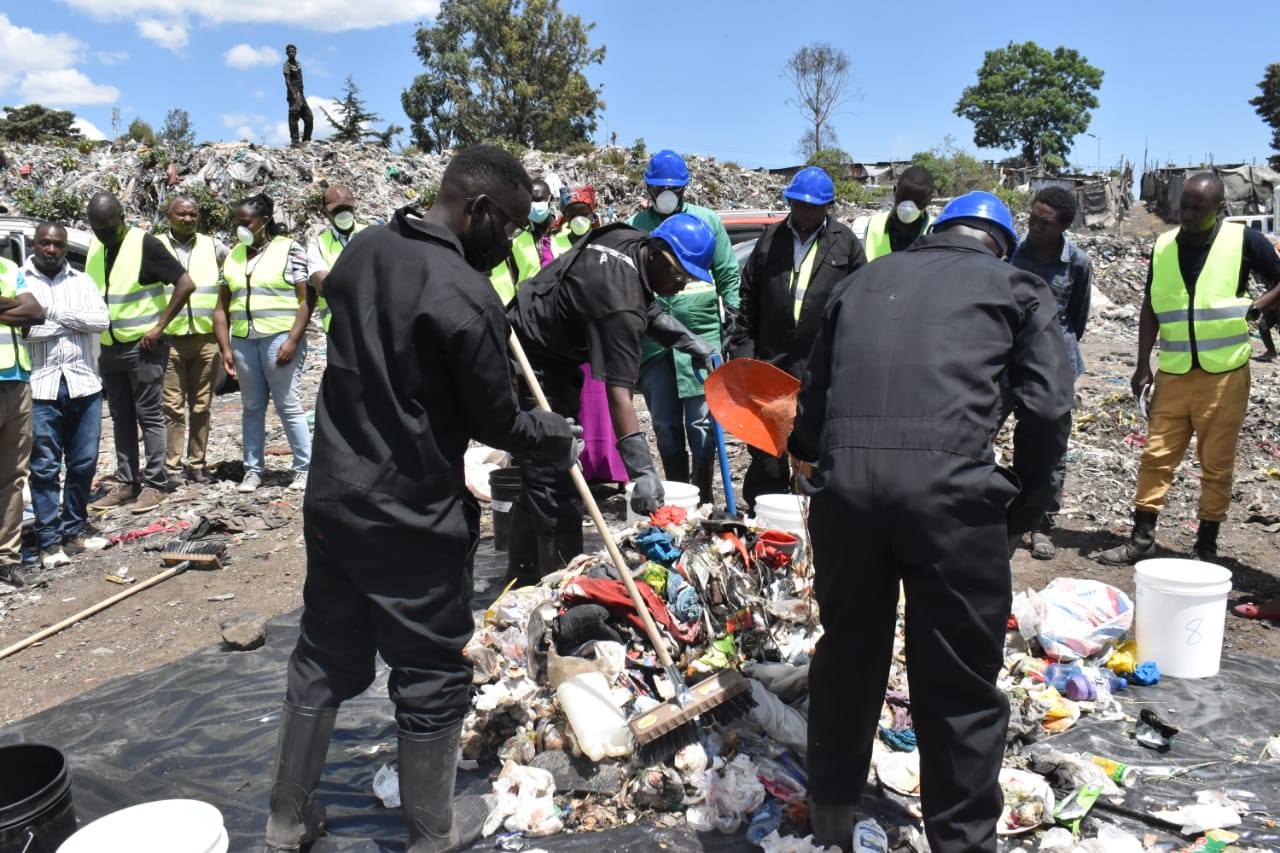
The government is taking several steps to address the challenges at Gioto Dumpsite and move Nakuru towards a circular economy. Field teams have been assessing the scale of daily dumping to better understand waste volumes and inform future recycling capacity.
At the same time, the study is mapping how plastics, metals, and organic waste can be reused instead of being burned or buried, promoting circular practices that reduce pollution.
Beyond environmental goals, the government is exploring ways to formalize recycling and improve livelihoods. The data collected from Gioto will feed directly into county planning, guiding the design of planning future waste recovery facilities and helping Nakuru reduce pollution while building a more sustainable
Why Circular Economy Matters
The circular economy is an economic model that seeks to eliminate waste, keep materials in use, and regenerate natural systems. Unlike the traditional “take, make, dispose” approach, it:
Tackles climate change and pollution, reduces reliance on finite raw materials and encourages innovation in product design and business models.
For Nakuru, adopting circular practices means cleaner air, healthier communities, and stronger economic resilience.
Gioto has been Nakuru’s main dumpsite since 1972, covering about 50 hectares and receiving an estimated 250 tons of waste daily. Trucks and tractors offload garbage while families, especially women and children, scavenge for plastics, metals, and food scraps.
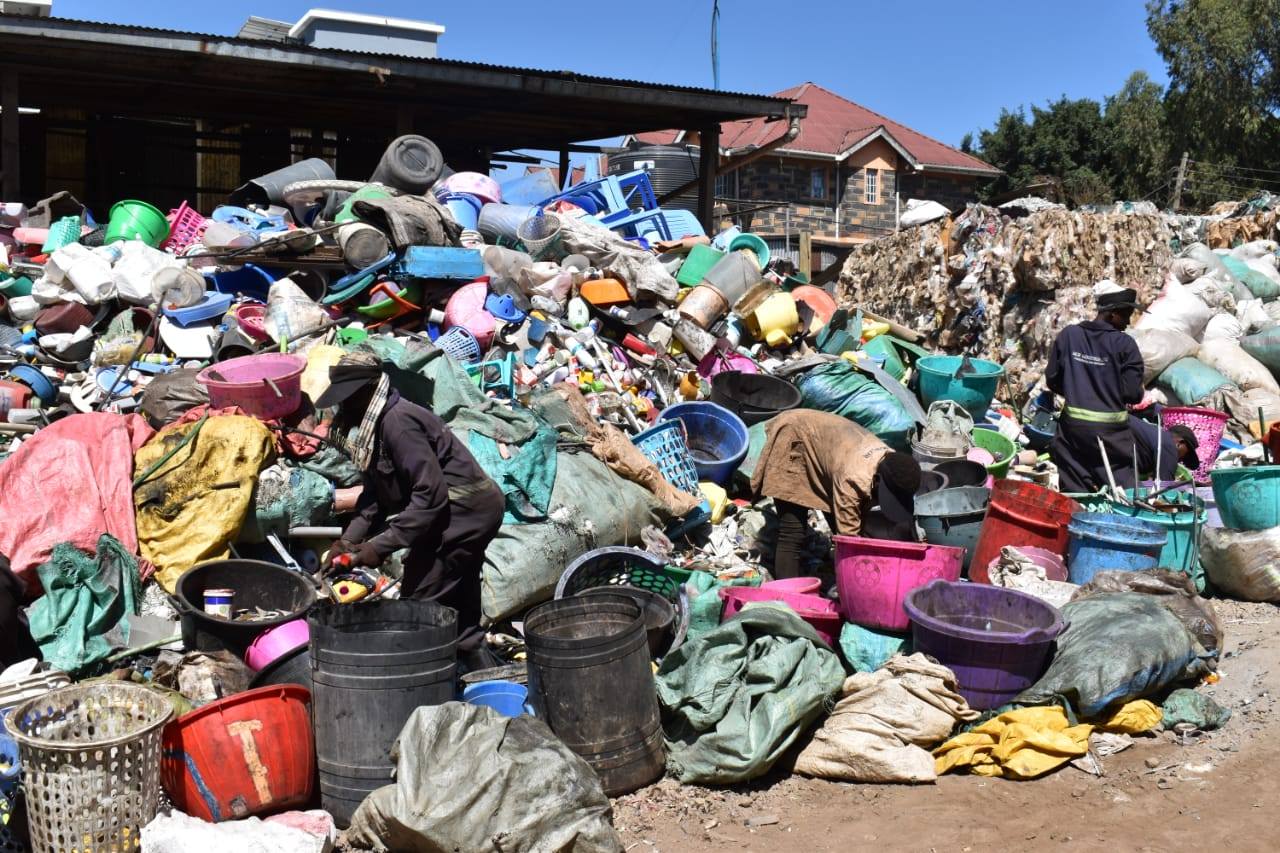
For many residents, Gioto Dumpsite is more than a mountain of waste — it is their only source of income. Families, especially women and children, survive by scavenging plastics, metals, and food scraps to sell or reuse.
Yet this lifeline comes at a heavy cost. The continuous burning of waste releases toxic smoke that hangs over the community, causing respiratory problems and exposing people to long‑term health risks. The site’s location on the Menengai Crater belt adds another layer of danger, as underground fires flare up during dry seasons, worsening the pollution and making life around Gioto even more precarious.
The site embodies Nakuru’s waste crisis — sustaining lives while endangering them.
If successful, the initiative could turn the dumpsite from a symbol of neglect into a model of innovation — where waste is no longer the end of the story, but the beginning of a new cycle.
Follow us on WhatsApp for real-time updates, community voices, and stories that matter.
-1785307406.jpeg)

-1784287755.jpg)